

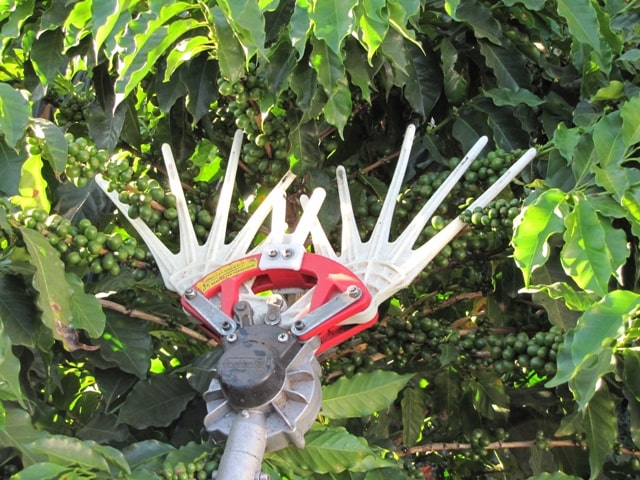

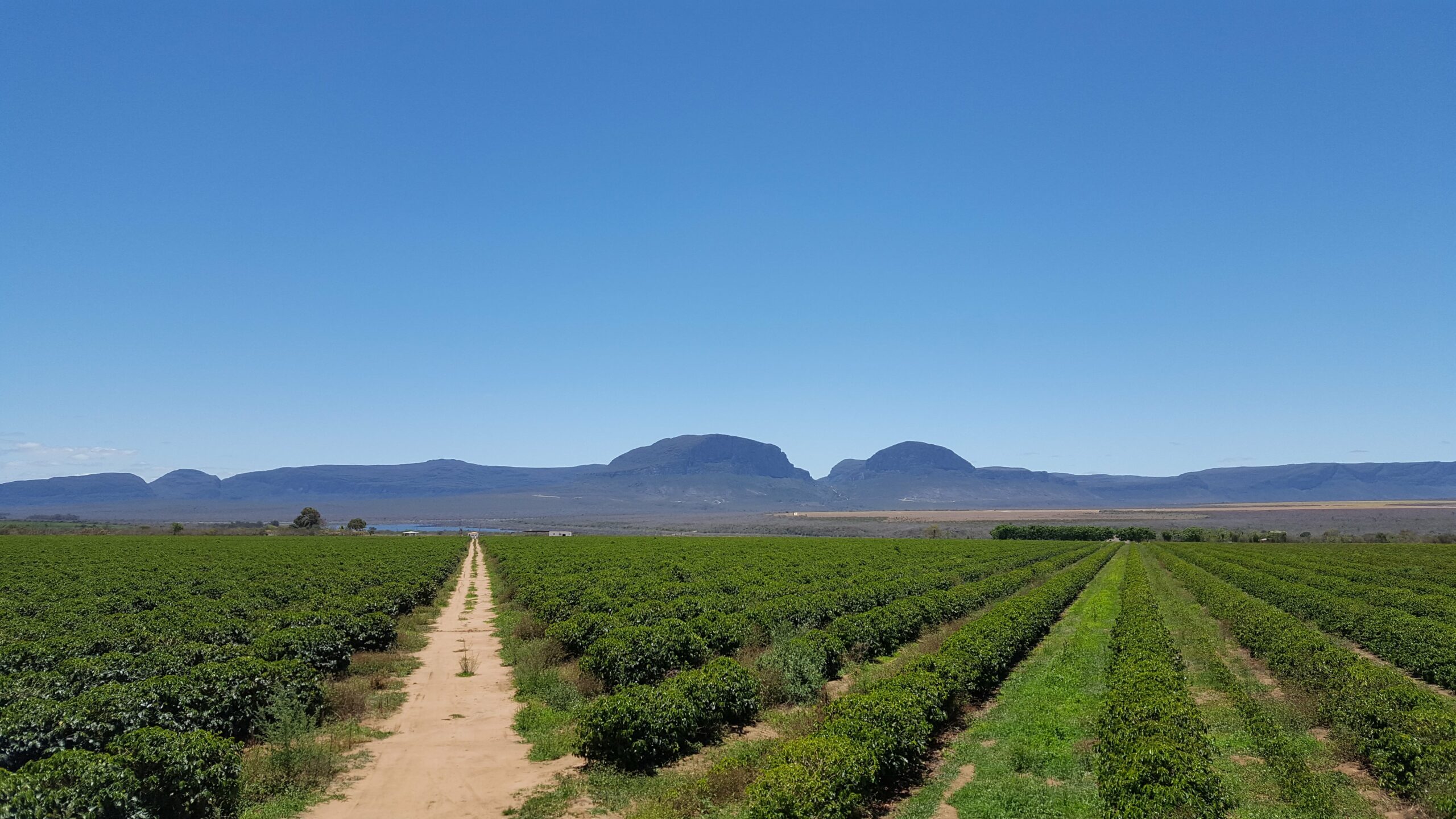
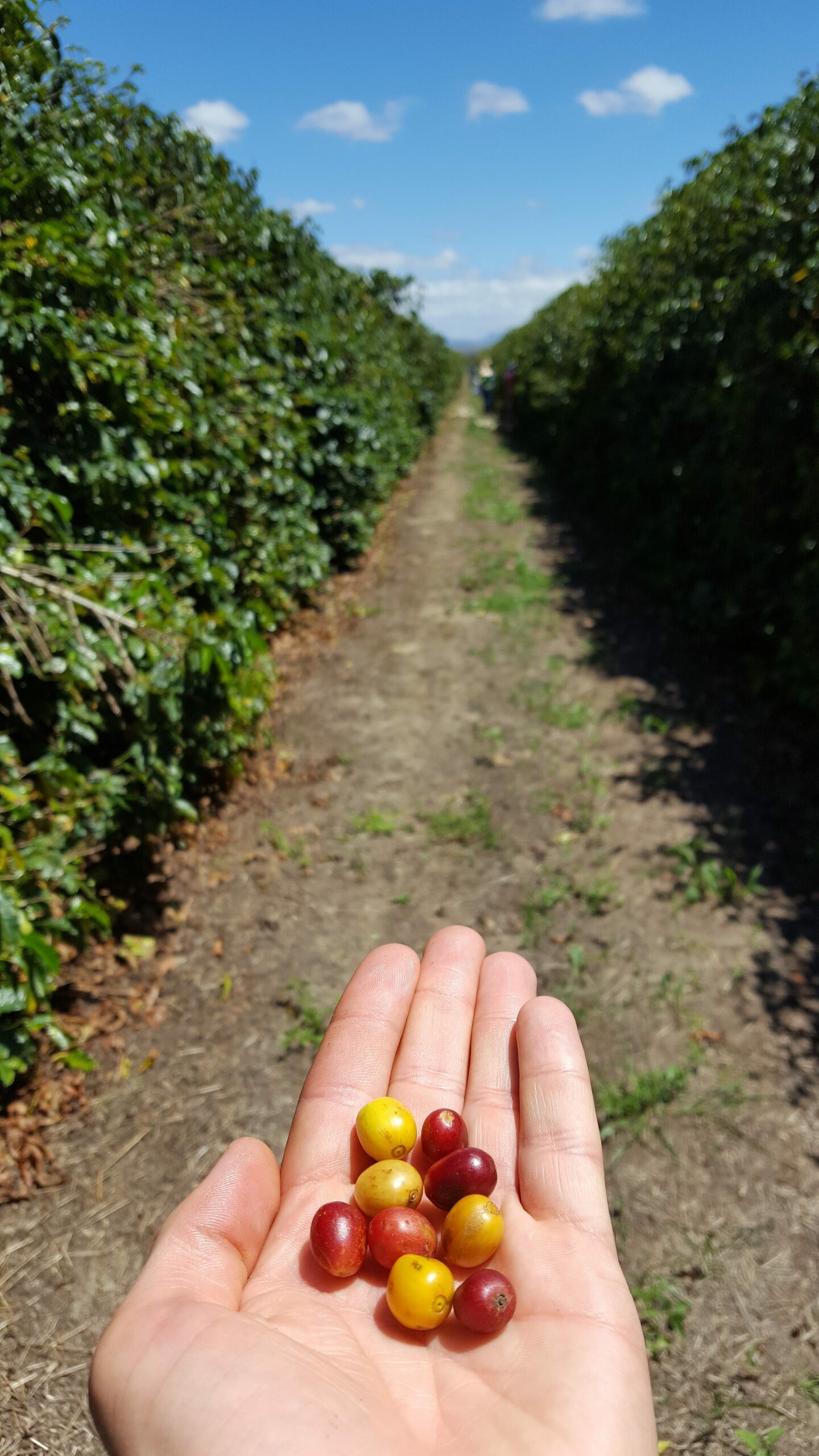

Brazil is the largest coffee growing country in the world, responsible for 30 percent of coffee grown worldwide, about 74 percent of which is Arabica. Brazilian coffee is grown on large plantations designed to facilitate efficient, mechanized processes. Due to the relatively flat landscape and high minimum wages, mechanical harvesting is prevalent. To be clear, mechanized picking is no longer synonymous with strip picking, and the use of harvesters is often combined with derriçadeira, handheld machines that can be manually aimed at more ripe areas of the tree. The result is a kind of mechanized selective picking that delivers high quality arabica coffee at imposing scale.
Most Brazilian coffees are processed using natural and pulped natural processes, meaning the coffee is dried with all or a large amount of fruit on the bean. This process imparts sweet, fruity notes and produces a creamy body. The result is a well-balanced, nutty, chocolatey profile with low citric acidity and smooth body — a universally enjoyable cup that has become famous the world over.
Understanding Coffee Grades
Brazil Natural Natural PB FC is a large lot Arabica that is sorted by defect and screen size. Peaberry (PB) is a naturally occurring mutation wherein coffee cherries develop a single, rounded seed rather than the typical two flat-sided beans. The result is a distinct screen size and roasting characteristic prized by many roasters. Fine Cup (FC) standard references the Green Coffee Association of New York standards, which indicated a clean cup with balanced sweetness and low to medium acidity, free of significant defects or off-flavors. This hard-working coffee is well priced, versatile and consistent.