

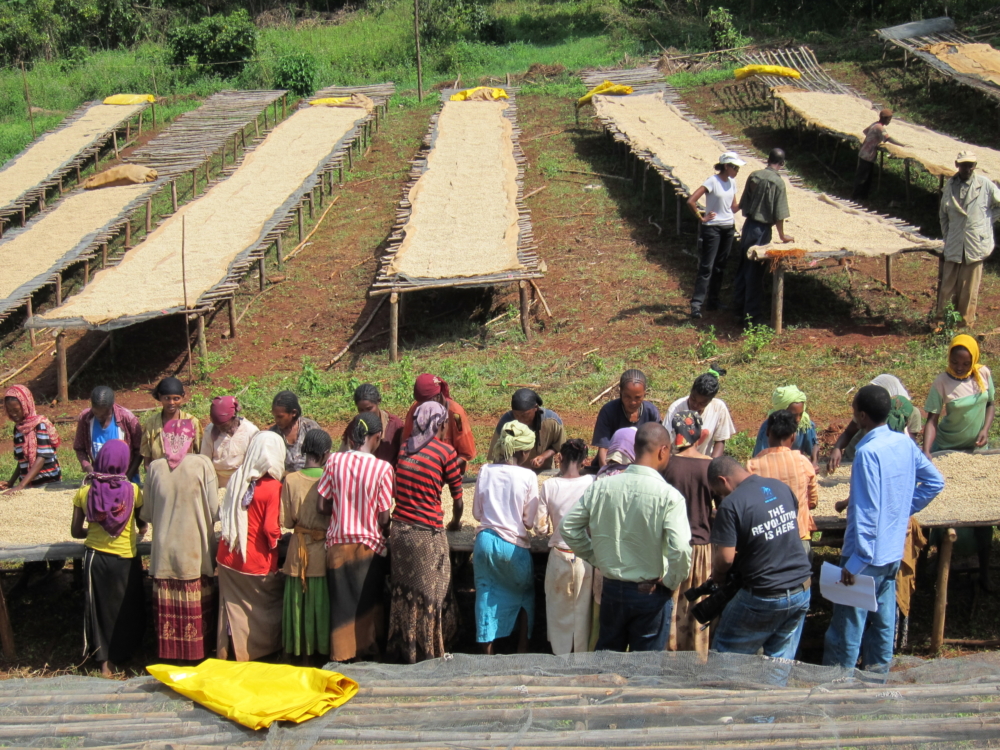

Ethiopia is widely regarded as the birthplace of coffee, and its beans remain some of the most celebrated in the world. Grown at high elevations in rich, fertile soil and processed using both washed and natural methods, Ethiopian coffee is known for its exceptional clarity, vibrant acidity, and striking flavor complexity. From the floral, tea-like notes of Yirgacheffe to the juicy berry tones of Sidamo and the rich, winey character of Harrar, each region offers a unique expression of Ethiopia’s rich coffee heritage.
Swiss Water Process
Swiss Water Process (SWP) decaffeination works through diffusion, not osmosis. Initially, green coffee beans are soaked in water until all the caffeine and flavor compounds are extracted. The beans are then discarded, and the solution they created is run through a carbon filter that removes the caffeine, leaving behind only the flavor compounds—what SWP calls its green coffee extract, or GCE.
When SWP decaffeinates a coffee, the beans are soaked with a small amount of the GCE, which creates a saturated solution in which the caffeine leaves but the flavor compounds remain in place, unaffected. The GCE is like a yeast “mother.” While initially SWP had to sacrifice some coffee to create it, once the first batch was made, it just needs to maintain the health of the GCE and keep it slowly regenerating, which it does by adding small amounts of clean water.