

Our Quality Control lab spends a lot of time doing what most coffee people wish they could be doing: cupping coffee. But every slurp serves a purpose. Behind each sample is a growing archive of sensory data that helps us to evaluate every lot and spot things that might otherwise go unnoticed.
Every now and then, these evaluations stop us in our tracks. Recently, one coffee had our QC team asking, “Wait … is this getting better?” Resultant conversations with our supplier landed us on a happy realization that we thought was worth sharing, alongside the high performance of an already well-loved coffee.
About Sampling
Sampling is a critical part of Quality Control for any green coffee importer. Not only do we provide samples for our customers but we gatekeep the integrity of our inventory, literally controlling its quality through a series of important sampling moments.
Every lot of coffee that we purchase is approved by our QC department via a pre-shipment sample. This 100- to 350-gram sample of green coffee is representative of the contracted lot. It is assessed physically (green graded) and sensorially (roasted and cupped) to identify any defects, as well as to ensure the flavor profile and overall performance meet the specifications in the contract. The coffee will not ship without this critical approval.
The coffee is then sampled again on arrival, once it has landed state-side and the container is unloaded into the warehouse. This sample is used to ensure that the lot has arrived soundly (that it did not suffer any exposure to contaminates or water damage during transit) and that it indeed meets the expectations of the contract.
Between Samples
The window between these samples can span months, depending on transit time, and during that time, coffee changes. Dried coffee is traditionally stored in parchment for protection and is only milled immediately prior to shipment. So, preshipment samples are usually small, hand-milled portions of the larger lot of coffee that still awaits hulling and, perhaps, a final green sorting.
Additionally, the flavor of any lot of coffee will change as the coffee rests. Experienced QC folks might become familiar with how a fresh coffee can present on the table and even anticipate how it might transform over time. For example, early-crop coffees from Guatemala can present a pointed and slightly vegetal or “greenish” acidity in the pre-shipment sample that indicates the coffee is very fresh. This acidity will soften and become more complex by the time the coffee arrives. Coffees from Burundi might seem more tea-like and have a lighter body in the pre-shipment sample, but they arrive with a deeper sweetness, heavier body and better cup structure.
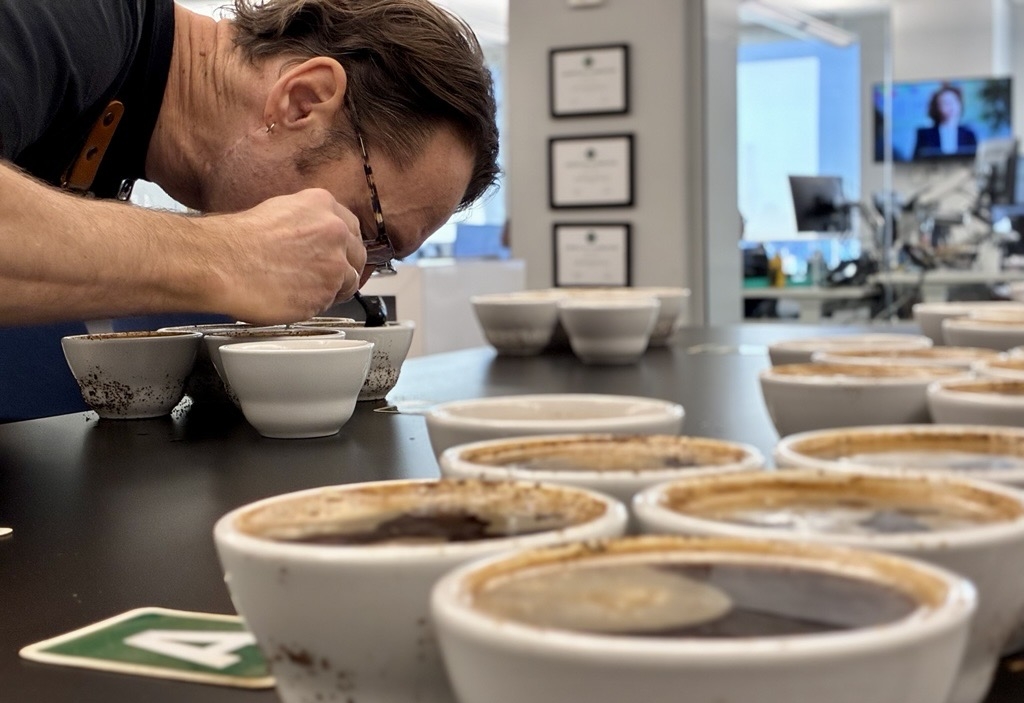
Quality Control performs a physical evaluation (green grading) and sensorial evaluation (cupping a roasted and brewed sample) for each lot.
InterAmerican Coffee’s Quality Control team collects (at minimum) these two data points — pre-shipment and arrival — on every coffee. They use this information to support our customers by sharing flavor notes and scores with the Trading and Marketing teams. They also support the Purchasing team, providing contextual perspective on vendor performance, including lot-to-lot consistency and year-on-year quality analysis. Finally, this CQ data also supports our suppliers, allowing for candid conversations regarding the product we are all invested in promoting, season after season.
Data-Driven Perspective
Over the past few weeks, one particular coffee has prompted this high-view reflection from our QC staff. Mexico Chiapas Turquesa, a staple and consistent “sweet-heavy” profile coffee, is pushing the boundaries of the box we usually assign it to. Five separate lots of this coffee shone on the cupping table this season, performing several points higher than expected.
“I would say that this coffee could be a great single-origin with vibrant fruit but plenty of foundational sweetness to keep it balanced and chuggable,” said QC Manager Ed Kaufmann. What’s more, these arrival samples are outperforming the pre-shipments.
As an agricultural product, we expect a degree of variation each year, as coffee develops slowly over the season, subject to weather conditions and farm management practices and processing. Still, this favorable variation made us especially curious.
We asked our export partner Exportadora de Café California (ECC) what might be responsible for the change. Trader Andreas Kussmaul shared, “There has not been a massive change, but we’ve noticed that over the past few years, producers have changed their coffee plants to new varieties. We think that is responsible for the great change in quality.”
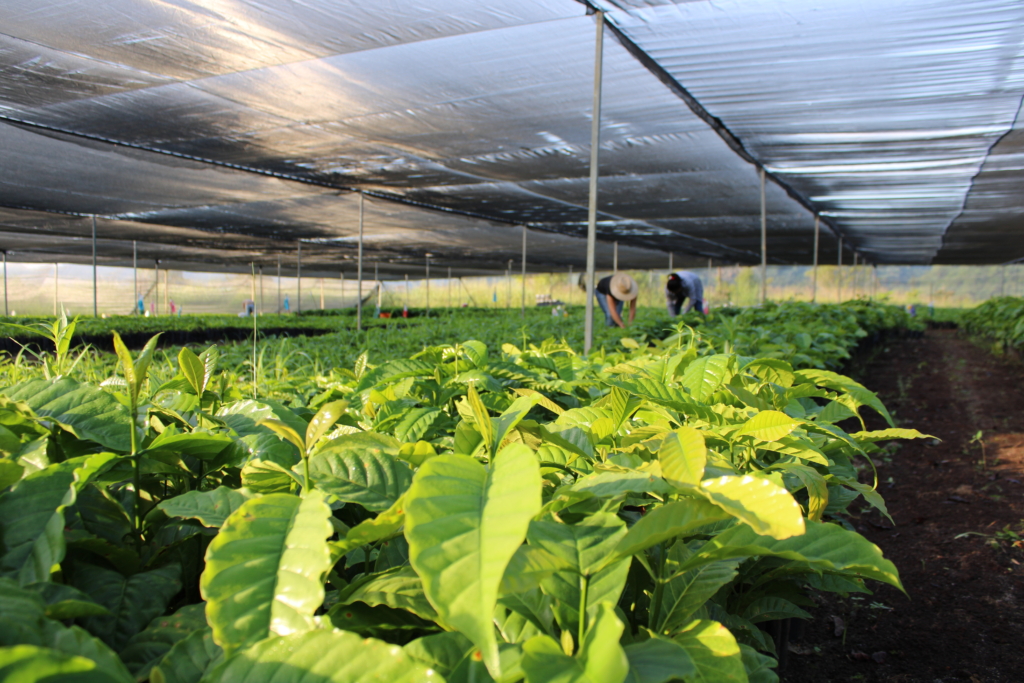
One of several ECC nurseries supplying Mexican producers with new seedlings for farm renovation.
These new plants are one result of ECC’s multi-pronged (and multi-decade) approach to securing the future of green coffee production in Mexico. Most recently through NKG Bloom, ECC has an impressive nursery operation that has grown and distributed more than 31 million plants to date, enabling smallholder producers to renovate their farms with more vigorous and productive species. Now that these new inputs have taken root, we’re tasting the literal fruits of the investment in improved coffee quality. (You can read more about NKG Bloom in Mexico here.)
Regardless of the reason behind this quality boon, we hope that you’ll benefit from our data collection and general flavor-nerding. Our results suggest that this year’s Mexico Chiapas Turquesa has perhaps even more versatility than in the past, able to serve as a blend component or as a stand-alone single origin offering.
If you’re familiar with this coffee, we hope you’re as excited as we are. And if you’re not acquainted yet, we hope you’ll give it a try. Happy tasting! •