

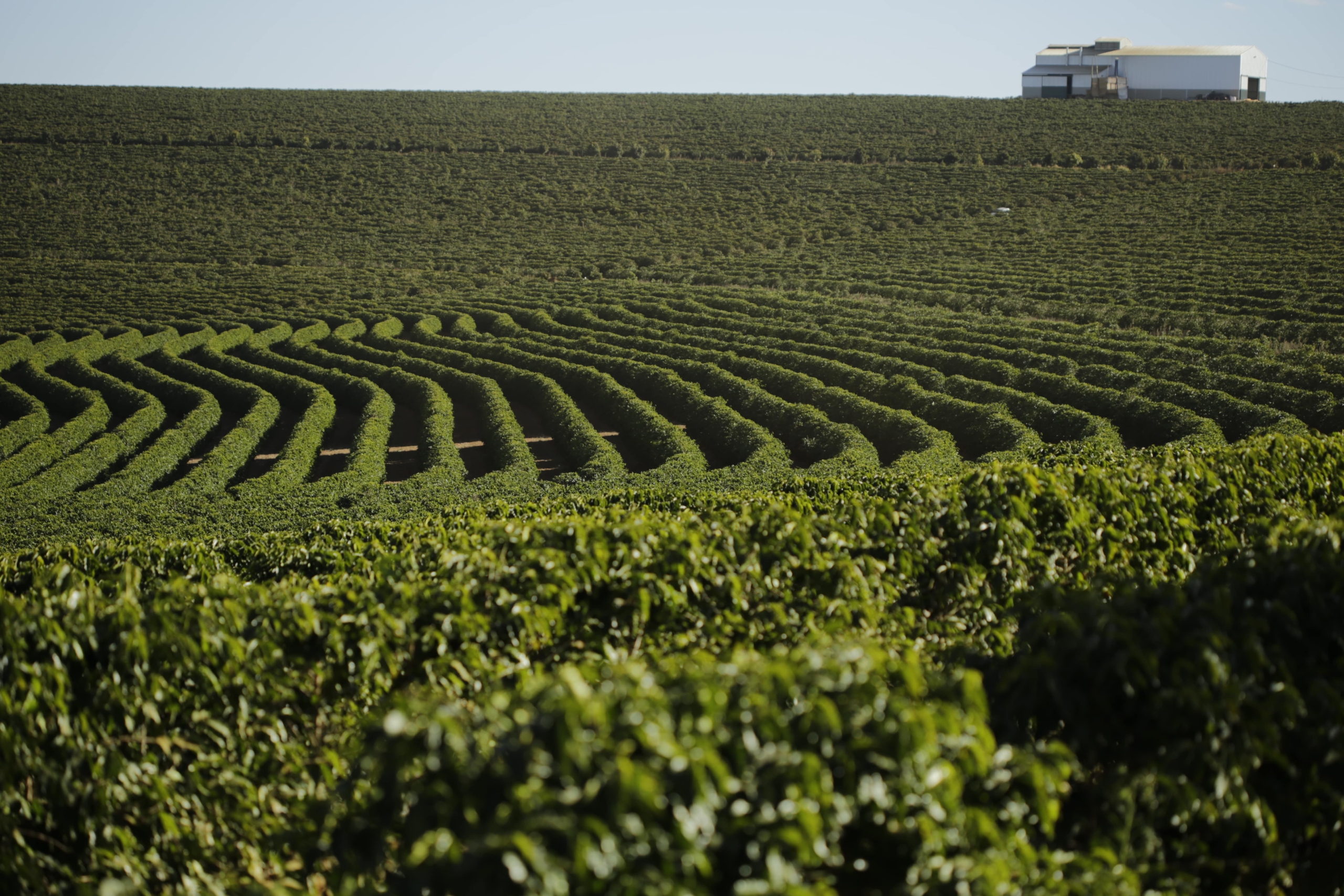

Brazil is the largest coffee growing country in the world, responsible for 30 percent of coffee grown worldwide, about 74 percent of which is Arabica. Brazilian coffee is grown on large plantations designed to facilitate efficient, mechanized processes. Due to the relatively flat landscape and high minimum wages, mechanical harvesting is prevalent. To be clear, mechanized picking is no longer synonymous with strip picking, and the use of harvesters is often combined with derriçadeira, handheld machines that can be manually aimed at more ripe areas of the tree. The result is a kind of mechanized selective picking that delivers high quality arabica coffee at imposing scale.
Most Brazilian coffees are processed using natural and pulped natural processes, meaning the coffee is dried with all or a large amount of fruit on the bean. This process imparts sweet, fruity notes and produces a creamy body. The result is a well-balanced, nutty, chocolatey profile with low citric acidity and smooth body — a universally enjoyable cup that has become famous the world over.
Methylene Chloride Process
Methylene chloride (MC) is a solvent used in both methods of direct decaffeination. The methylene chloride process is thought by some in the coffee industry to maintain coffee flavor better than other processes.
Based on extensive research data, the U.S. Food and Drug Administration (FDA) has determined that methylene chloride is safe for use in coffee decaffeination. FDA regulation allows for up to 10 parts per million (ppm) of residual methylene chloride, but actual coffee-industry practice results in levels that are 100 times lower than this amount.
During this decaffeination process, the coffee beans are soaked in hot water to extract much of the caffeine from the beans. The beans are then removed from the water and the methylene chloride solvent is added to bond with the caffeine. After the methylene chloride/caffeine compound is skimmed from the surface of the mixture, the beans are returned to reabsorb the liquid. This method of decaffeination (sometimes called the KVW method in Europe) removes between 96 and 97 percent of caffeine from a batch of coffee.