


Kenya Tekangu Tegu AB comes to us through our regional export partner, NKG East Africa. NKG East Africa serves as our on-the-ground representative across Kenya and neighboring origins. Notably, their team works directly with cooperatives, factories and producers to manage pre-selections, quality control, logistics and traceability from harvest through shipment. With deep regional relationships and technical expertise, NKG East Africa plays a critical role in helping us identify, secure and deliver high-quality coffees with transparency and consistency year after year.
Tegu Factory
Located just outside the town of Karatina in Nyeri County, Tegu Factory is one of the largest and oldest wet mills within Tekangu Farmers Cooperative Society. The society comprises four factories and has built a longstanding reputation for disciplined processing and classic Nyeri cup profiles. Tegu works with approximately 800 active farmer members and produces around 1,100 bags (60 kg) annually.
Set at 1,600–1,800 meters above sea level on clay loam soils, the factory benefits from roughly 1,400 mm of annual rainfall and an average temperature of 20.5°C . These conditions consistently support slow cherry maturation and concentrated flavor development. Typically, flowering occurs between February and March, with harvest running from October through December. Coffee is generally available for shipment between March and April.
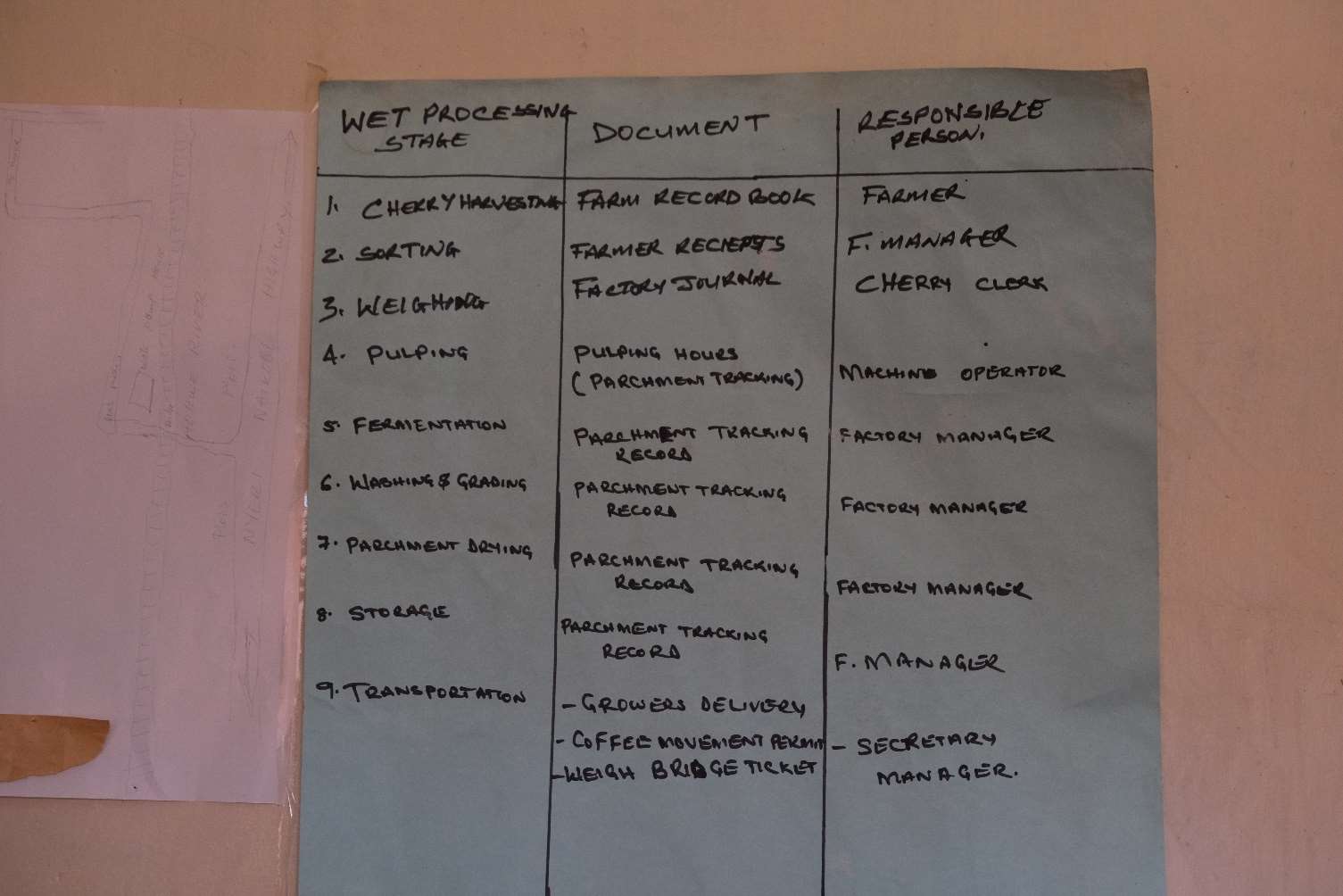
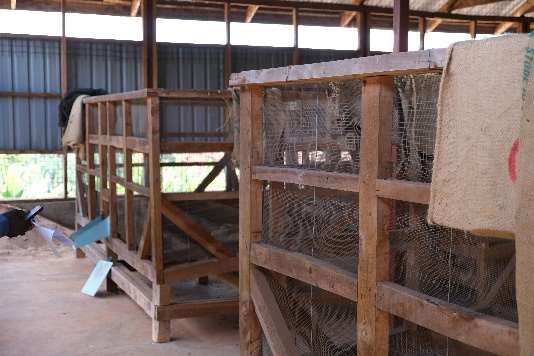
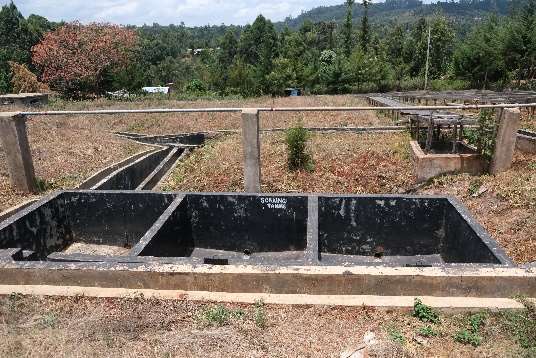
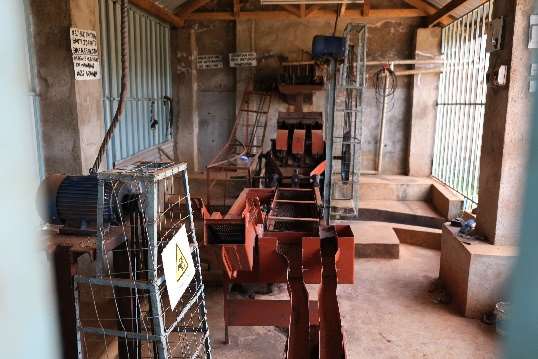
Producer members cultivate a mix of SL 28, SL 34, Batian and Ruiru 11. These varieties have been selected for their balance of cup quality, resilience and yield. Kenya Tekangu Tegu AB cherry is carefully sorted prior to pulping. Next, the parchment undergoes overnight fermentation. Then, the parchment is washed and graded by density into P1, P2, P3, P lights and pods. Drying takes place on raised tables for 8–14 days. Slow drying allows for consistent moisture reduction while preserving clarity and structure.
Tekangu Farmers Cooperative Society
Tekangu FCS emphasizes traceability and standardized processing across all its factories, ensuring consistency from delivery through export. The society also supports member productivity by distributing organic manure derived from coffee pulp, reinforcing soil health and long-term sustainability.
Cupping notes: Cranberry, mango, plum, sundried tomato, juicy.