

In August 2025, InterAmerican Coffee Trader Pablo Lara visited northern Peru with a group of customers. The trip was designed with clear goals: to strengthen relationships across the supply chain, deepen trust between roasters and producers, and better understand where collaboration can meaningfully improve quality, resilience and long-term partnerships.
While many call such visits “origin trips,” Pablo prefers “supplier visits,” which is a clear illustration of his focus. “Bringing customers into a producing country — into conversations with the larger supply chain, from cupping rooms and farm kitchens to mill workers and exporters — creates shared memory, and shared memory is the foundation of lasting trade,” says Pablo. “The goal was not just to taste coffees, but to understand people, systems and potential.” Here is his report, in his words.
COINCA: Scale with a Specialty Lens
Our first stop was Lima, where we visited Compania International del Cafe S.A.C. (COINCA), our NKG sister exporter and one of Peru’s most established coffee institutions. Founded in 1969 and now the country’s fourth-largest exporter, COINCA recently expanded its focus to include microlots and differentiated specialty offerings.
Under the leadership of Commercial Manager Anna Fath and Junior Trader Marjorie Parrilla, COINCA is pairing scale with nuance. Their presentation for us — delivered over cups of a beautiful yellow Caturra pourover from Chirinos — covered Peru’s coffee history, regional mapping, grades and future investment. Key takeaways reinforced both the challenges and strengths of Peruvian coffee: 95% of farmers work fewer than five hectares, most production sits above 1,100 masl, and Cajamarca and Amazonas deliver the strongest balance of quality and volume.
We left encouraged by COINCA’s ability to offer everything from solid regional blends to well-packaged specialty lots (30kg bags with fun, full-color logos) and a clear understanding of the opportunity to work together on mixed boxes and project-based offerings in future harvests.
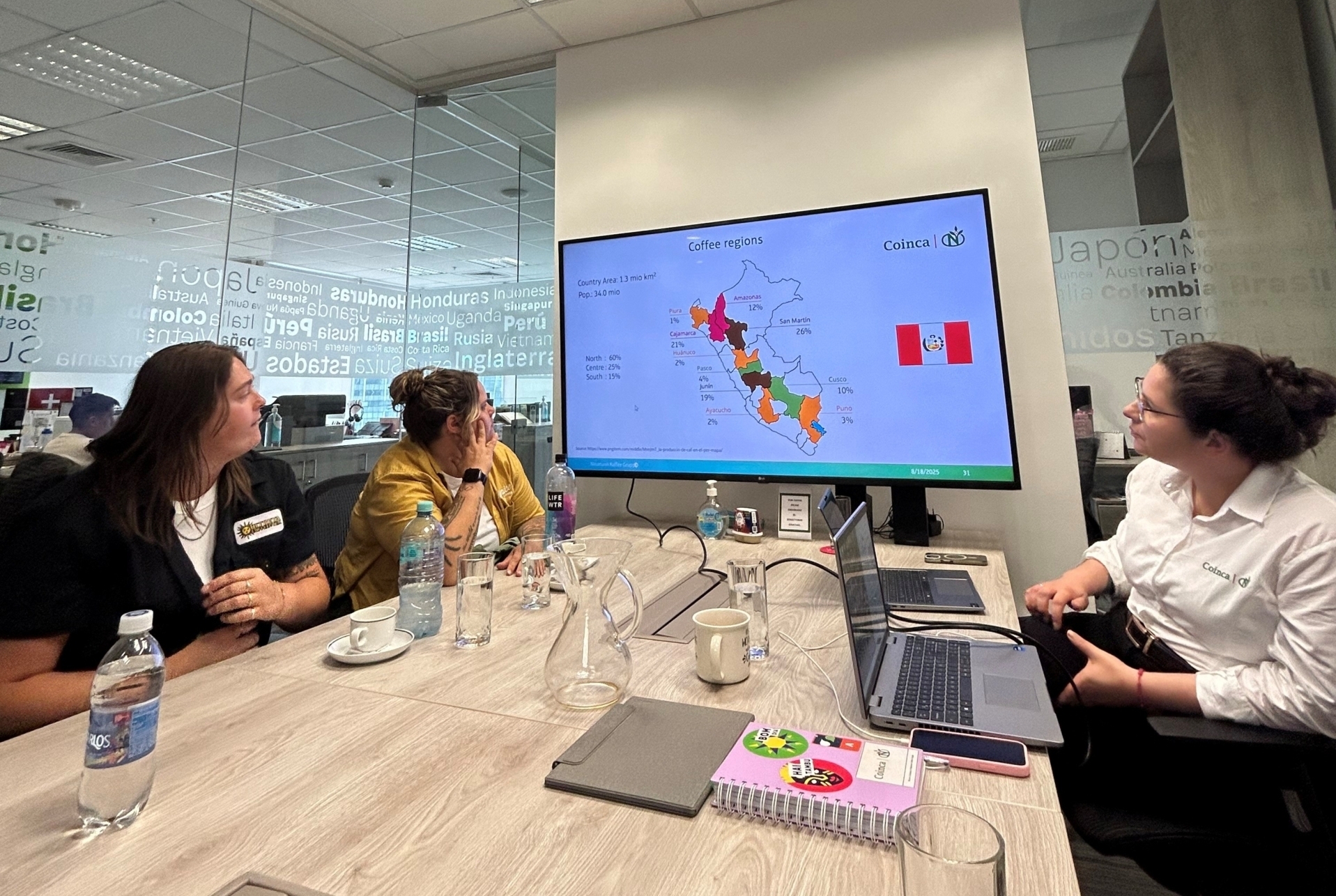
In the COINCA office with Commercial Manager Anna Fath.
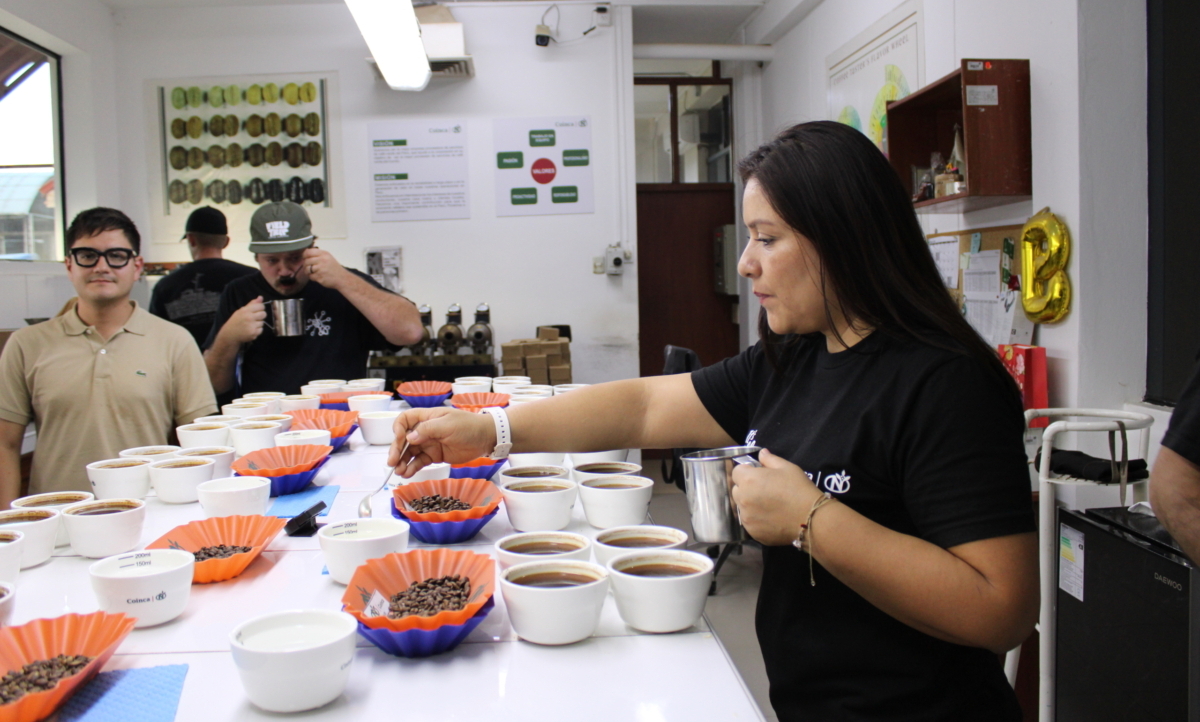 COINCA’s excellent QC lab is run by women, including Betsy Julca.[/caption]
Cajamarca: The Heart of Northern Peru
Next, we visited Cajamarca city — flying in from Lima before continuing by road to Jaén and San Ignacio — because understanding this region’s coffee starts with its history. Long before Inca rule, Cajamarca was an important urban center, and throughout the 20th century it became the population source for the surrounding coffee zones. Leaving the city, the markets told the story of the land ahead: highland staples like corn, potatoes, wool, and dairy alongside sugarcane, coffee, cacao and tropical fruit from lower elevations.
Jaén, the region’s commercial coffee hub, was as energetic as ever; its streets lined with warehouses labeled with familiar importer names. At the COINCA mill, Marjorie and her team hosted a cupping that showcased a wide range of offerings, from solid commercial grades to distinctive varietals and alternative processes. This helped ground our understanding of market preferences and quality segmentation.
San Ignacio: Cooperatives and Community
From Cajamarca we continued to San Ignacio, where coffee shapes everything from the town’s economy to its murals. In the eight years since my last visit, improvements in infrastructure and living conditions were marked, reflecting several profitable harvests.
Jaén is Peru’s northernmost coffee-producing region, sharing a border, and ideal growing conditions, with southern Ecuador. While the environmental inputs may be similar, coffee culture has evolved differently here. Peru’s cooperative model, shaped by agrarian reform and church-led organization, contrasts sharply with Ecuador’s single-farm, high-end specialty focus just across the border. Seeing these two systems so close together was a powerful reminder that quality, organization and market strategy are as much historical and social choices as they are agricultural ones.
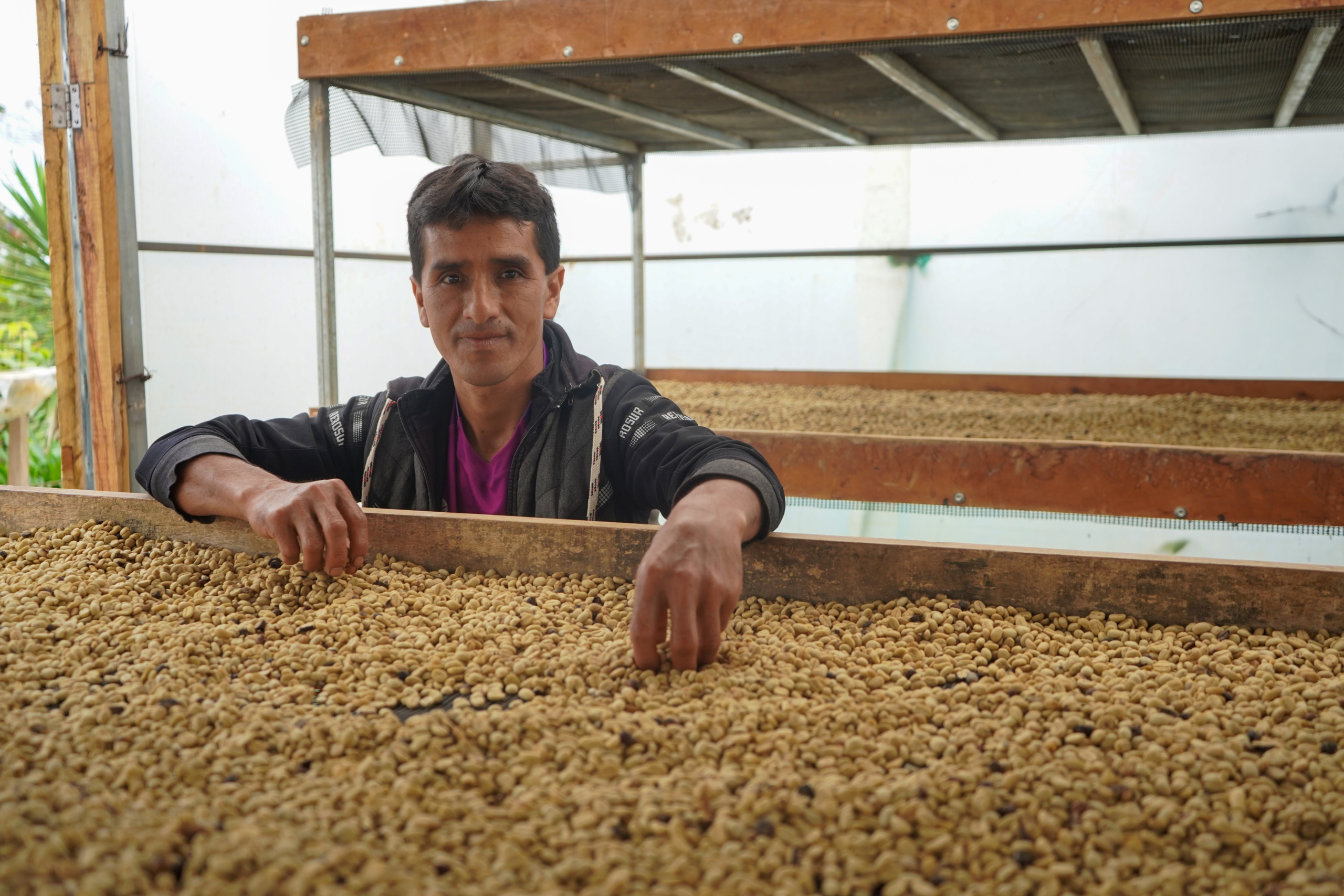
An Aprocassi producer shows off his drying beds.
Aprocassi
Our first host in San Ignacio was Aprocassi, a cooperative that InterAmerican Coffee has partnered with since 2010 and that continues to evolve alongside the region. After meeting its team over breakfast at the Aprocassi Café — one of the town’s favorite gathering spots — we headed into the field, carrying with us a strong sense of the co-op’s momentum after exporting 84 containers in the 2025 harvest.
What stood out most was the depth of leadership rooted in farming families: CEO Duberli Campos, himself the son of member farmers, has grown through every level of the organization to now lead it with a fresh, forward-looking vision, expanding sourcing around Jaén and building a team that is now 65% women. That continuity between generations was on display at the farm of Don Santos Jimenez, a founding member who transformed wilderness into a thriving coffee farm and now proudly watches his children carry the work forward. Over his long career, he has only had three foreign visitors (including us). We were truly honored to spend time with him, and our visit would not have been possible without Larisa Tenorio, who manages the co-op’s commercial department.
Aprocassi is a powerful example of how Peru’s cooperative model blends history, business and community into a resilient supply-chain model.
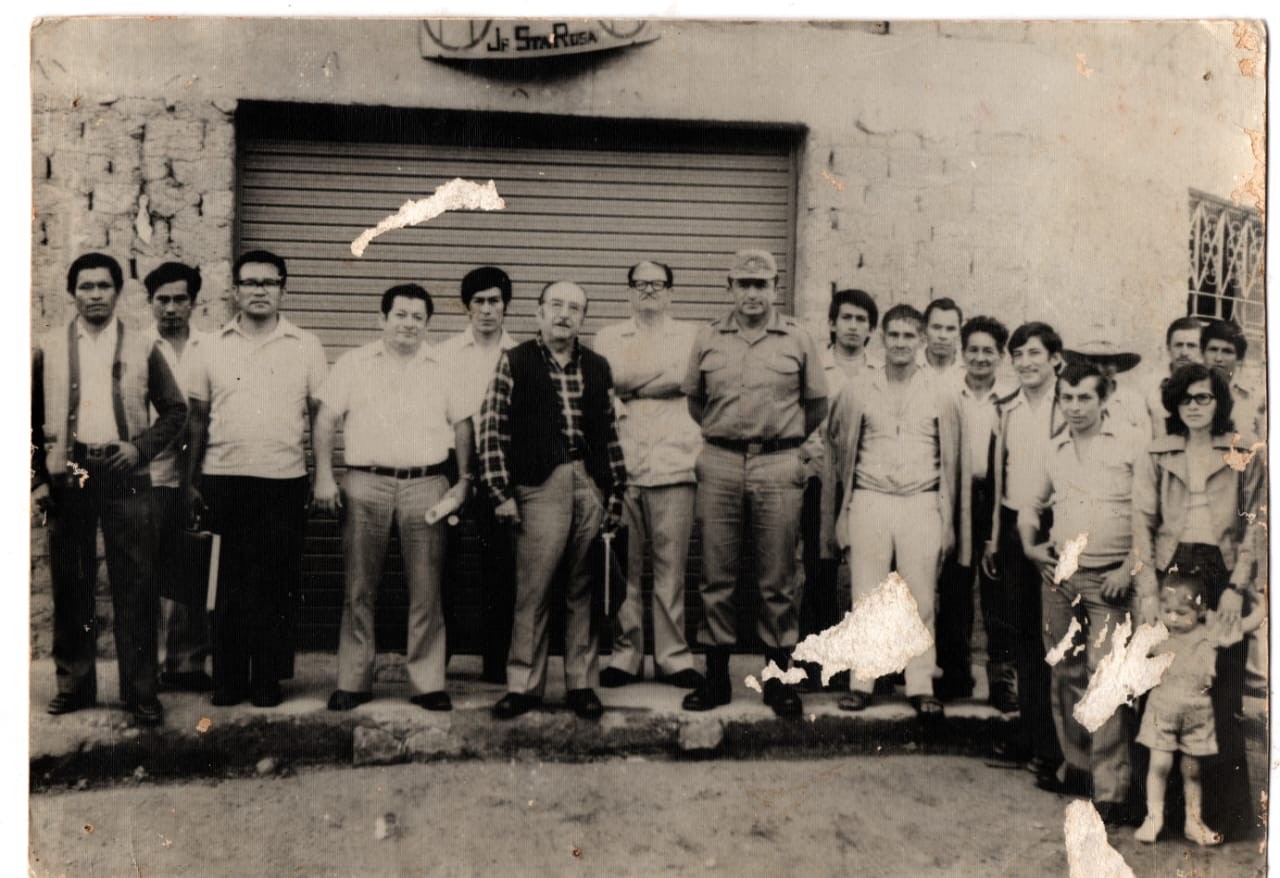
The founding members of Peru’s COOPAFSI cooperative.
COOPAFSI
We spent our second and third days in San Ignacio with COOPAFSI, one of Peru’s oldest cooperatives. Founded in the 1950s, it’s known for its rigorous quality control and close relationships with its 450 members. Despite financial constraints limiting 2025 exports to 65 containers, the strength of the organization was clear, from field-level agronomy to a large, integrated dry mill operation in Chiclayo and strict cupping protocols.
Hosted by agronomist Keyner Cardenas, we spent time with producers from the historic Cesara committee, meeting farmers whose coffees anchor our 2025 purchases and reflect the diversity and potential of the region. From Don Luciano’s experimental processing and nurseries, to Primitiva García’s proudly women-run farm with impeccable drying conditions, to Emérita Peña’s vibrant, meticulously replanted plots and Don Aníbal Jaime’s diversified microlot operation, each visit underscored the strength of COOPAFSI’s model: technical support, producer pride and long-term investment translating into quality, resilience and memorable coffees.
The visit was anchored by an exceptional team: Luzmila Loayza has been COOPAFSI’s commercial director since 2010, and her care, precision and creativity shape everything from exports to customer relationships; and Riquelmer Cruz, head of QC for the past 13 years, brings deep technical knowledge and tireless cupping to the team to ensure consistency and clarity of profile. Together with standout producers like Primitiva García, Emérita Peña, Don Luciano Córdova and Don Aníbal Jaime, COOPAFSI demonstrates how technical excellence, thoughtful leadership and genuine hospitality come together to build a cooperative that delivers both quality and trust year after year.
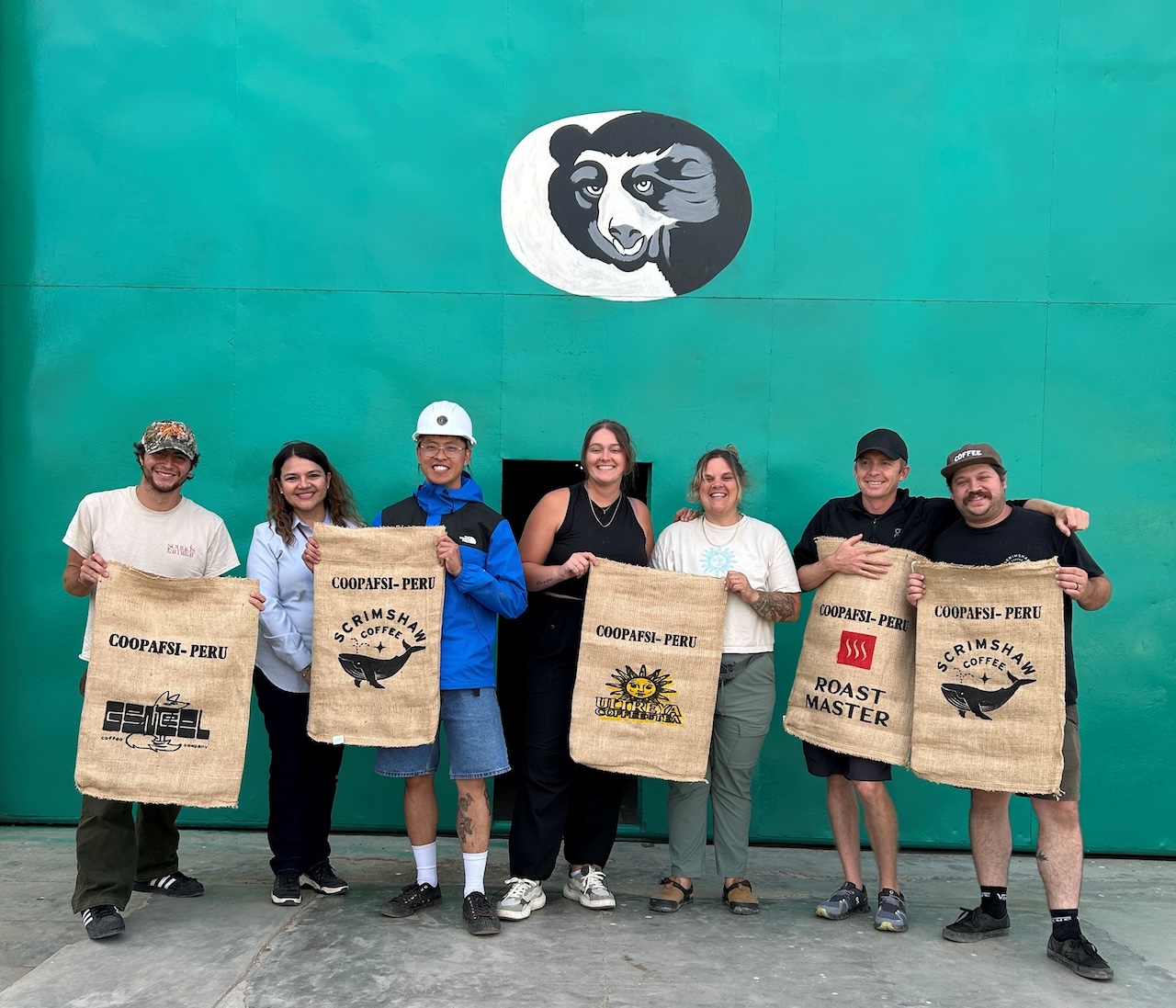
The Andean bear, also known as the “bespectacled bear,” due to the eyeglass-like pattern around its eyes, inspired the logo behind InterAmerican’s El Oso coffee from COOPAFSI.
Reflections on Progress in San Ignacio
Comparing my visits to San Ignacio in 2018 and again in 2025, the most notable change was the steady improvement in on-farm processing infrastructure. While it would be inaccurate to generalize from a handful of examples, what we observed consistently was better fermentation, de-pulping and drying setups. Cooperative-facilitated government programs have supported the construction of improved drying beds, and higher coffee prices have enabled producers to invest in de-pulping upgrades like sorters. Further, years of hands-on agronomy have refined fermentation practices with a strong emphasis on cleanliness. From a buyer’s perspective, these incremental but widespread improvements are clearly reflected in the overall rise in quality coming out of the region.
Beyond the Farm: San Ignacio’s First Latte Art Throwdown
One of the most rewarding moments of the trip was helping host San Ignacio’s first latte art throwdown, a small but meaningful way to bring the local coffee community together. Held at the COOPAFSI café, the event gathered baristas, co-op staff and visiting roasters in a relaxed, celebratory setting that reflected how far the region has come — not just in production but in coffee culture. With support from Riquelmer and prizes brought by our customers, 10 local baristas competed, exchanged ideas and engaged directly with buyers about drinks, workflows and coffees from beyond Peru.
Seeing members of COOPAFSI and APROCASSI side by side, celebrating Peruvian National Coffee Day in the town square afterward, felt like a fitting close to a visit defined by progress, collaboration and shared pride in San Ignacio’s coffee future.
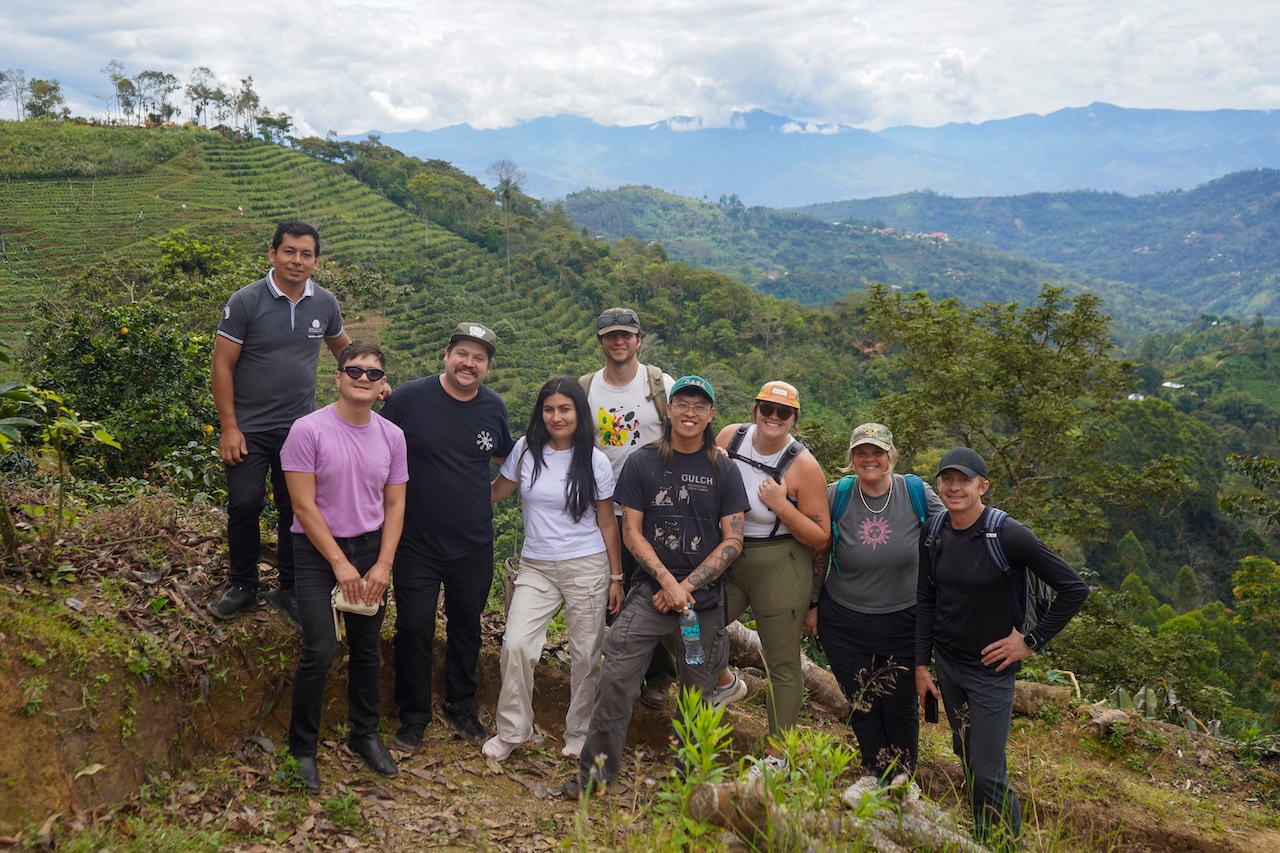
Final Day in Chiclayo, Plus Looking Ahead
Our last day took us on an early, eight-hour drive from San Ignacio to Chiclayo, a key coastal city where much of northern Peru’s agricultural output is prepared for export through the port of Paita. At COOPAFSI’s dry mill, Sandra Tello guided us through a meticulous operation — from truck arrival and sampling to labeling, cupping and final milling. Watching the QC process firsthand, alongside Shelton Silva and his coordination with Riquelmer, reinforced how much care goes into preserving quality after coffees leave the farm. The facility’s cleanliness, discipline and recent investment in new sorting equipment for microlots spoke to a cooperative that is planning for the future.
Stepping back from the trip as a whole, the potential of Peruvian coffee feels undeniable. Cajamarca has clearly established itself as the country’s principal coffee hub, with recent national recognition — from Cup of Excellence wins to barista championships —underscoring how far the region has come.
What stood out most is how quality improves fastest when it is driven from within: when producers, technicians, coop teams, baristas and roasters are all part of the same conversation. Connecting visiting roasters with farmers, QC teams and local baristas created genuine, two-way exchanges around brewing, processing, equipment and ideas that will continue well beyond this trip. Meeting the new generation of leaders shaping this origin — Marjorie, Duberli, Larisa, Luzmila and Riquelmer — left me optimistic and excited to see where they take Peruvian coffee next. •
Check out this short film about the trip, made by Genteel Coffee Roasters!